 Panacea Bio Chem
Technical Specification
Metabolic Peptides
Rev. Jul 2026
Rev. Jul 2026
Panacea Bio ChemPanapatide keeps the dual GLP-1/GIP pharmacophore that made tirzepatide work — the same drivers of weight loss — while a Panacea Bio Chem design change, sited away from the receptor interface, aims at less muscle loss at matched weight loss and a cleaner tolerability profile.
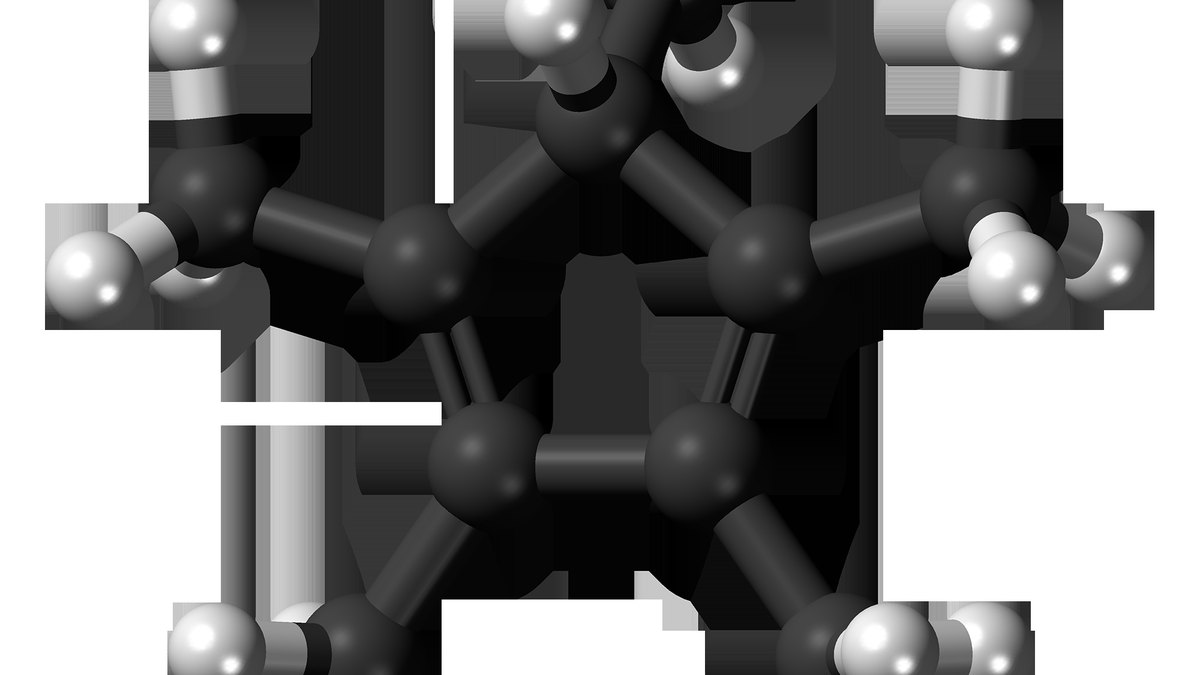
Panapatide is Panacea Bio Chem's bioengineered tirzepatide-class dual GLP-1/GIP agonist — its own entry in the dual-incretin class, built on the same two-receptor pharmacophore that made tirzepatide effective. The GLP-1 arm curbs appetite and sharpens glucose-dependent insulin; the GIP arm adds a complementary metabolic effect; together they drive large, well-studied weight loss. Panapatide is designed to keep that engagement at tirzepatide-equivalent strength while a Panacea design change, placed away from the receptor interface, aims at a better body-composition outcome — less lean-muscle loss at matched weight loss — and a cleaner tolerability profile. The framing is deliberately narrow: same pharmacophore, better outcome. This specification explains the dual-agonist class in plain language, the medicinal-chemistry toolkit that builds one, and where Panapatide's design intent sits — then how it is dried, stabilised and delivered on Panacea's own platform. The exact sequence, the design change and the supporting data are proprietary to Bogdan Dicoias, and no efficacy or outcome is asserted. It is a scientific description, not medical advice.
Tirzepatide changed the ceiling of metabolic medicine by pressing two related receptors with one molecule. It is a dual GLP-1/GIP agonist1: a single engineered chain that switches on the GLP-1 receptor — which curbs appetite, slows the stomach and lifts glucose-dependent insulin — and the GIP receptor, whose complementary metabolic action sharpens the whole response. That two-receptor pharmacophore is why the class reaches larger weight reduction than a GLP-1 agonist alone.
Panapatide starts from exactly that pharmacophore — and keeps it. Panacea's aim is not a new receptor target or a bigger number on the scale, but a better kind of result at the same engagement. Rapid weight loss driven by appetite suppression tends to take some lean muscle with the fat, and the class carries a familiar tolerability burden. Panapatide is engineered to hold tirzepatide-equivalent action at GLP-1 and GIP while changing what the rest of the molecule does — the parts that shape distribution, exposure and the body's muscle-handling response — so that more of the weight lost is fat, and the ride is smoother.
Keep the pharmacophore that made it work. Re-engineer everything around it that decides the quality of the result.
To see where Panapatide's edit sits, it helps to know how the class is built at all. A dual agonist is not a copy of a hormone — it is a purpose-built analogue. Native GLP-1 is a gut hormone released after a meal that sharpens insulin, calms glucagon, slows the stomach and turns down appetite2. It is an elegant signal and a hopeless medicine in its natural form, because the enzyme DPP-4 destroys it within one to two minutes. The designer's job is to keep the receptor-facing part that carries the message and rebuild everything that makes the chain fragile — then tune a second receptor, GIP, into the same sequence. The transformation is a compact set of well-understood moves, rendered here as the core design provisions of the class:
Put the first three moves together and you have the arc of the field. Native GLP-1 lasts minutes; liraglutide added a sixteen-carbon fatty acid and reached once-daily dosing; semaglutide combined an Aib substitution with a longer di-acid fatty chain and reached once-weekly, then a first oral form5. Tirzepatide carried the same logic onto a two-receptor sequence — a dual GLP-1/GIP agonist — and lifted the weight-loss ceiling again. Panapatide belongs to this rung, and refines it:
| Molecule | Key design edits | Receptors engaged | Design emphasis |
|---|---|---|---|
| Native GLP-1 | none (the natural hormone) | GLP-1R | ~1–2 min half-life |
| Semaglutide | Aib (R-1) + C18 di-acid + linker (R-2) | GLP-1R | once-weekly reach |
| Tirzepatide | Aib residues + fatty-acid chain, balanced sequence (R-1/2/3) | GIP-R + GLP-1R | dual-agonist weight loss |
| Panapatide | tirzepatide-class dual pharmacophore + Panacea body-composition layer (R-3/5) | GIP-R + GLP-1R | muscle-sparing · cleaner tolerability |
Rows are drawn from separate programmes with different designs and populations; they are shown to illustrate where the class sits, not as a like-for-like ranking. Panapatide is investigational and no comparative outcome is asserted.
Read down that table and the logic is plain: each rung is not luck but the same handful of edits applied with more precision. Panapatide's precision is spent not on adding a third receptor but on the quality of the dual-agonist result — the R-5 layer.
Here is the whole point of the programme. When weight comes off quickly, some of it is lean muscle, not just fat — the class's known trade-off — and the strong appetite and gut effects that come with it shape how people tolerate treatment. Panapatide is designed to move both of those without touching the engine of the weight loss itself.
The reasoning is that most of what an incretin analogue does to appetite and glucose is decided at the receptor-facing part of the molecule — the pharmacophore Panapatide keeps at tirzepatide-equivalent strength. But body composition — the fat-to-lean split of the weight lost — and tolerability are shaped by a different layer: how the molecule is distributed and exposed over time, and how the body's muscle-breakdown programme responds. Panacea's engineering change lives in that second layer. By re-tuning it while leaving GLP-1 and GIP engagement intact, the design targets:
This mirrors the "same pharmacophore, better body-composition outcome" approach Panacea takes across its bioengineered incretin programmes — a sibling logic to Panatrutide, the triple-agonist entry → and Panaglutide, the GLP-1 entry →. None of this is finished: lean-mass preservation, tolerability and durability are live, investigational questions, and Panapatide is described here as ongoing science rather than a settled outcome.
Quick weight loss should not have to spend muscle to pay for it. That is the problem Panapatide is engineered against.
A long, acylated dual-agonist chain is a fragile molecule: it can oxidise, aggregate or slowly unfold if it is handled, dried or stored carelessly — and a molecule engineered for a subtle body-composition edge is worth nothing if the vial ages it. The pharmacology is, in a sense, the solved part; keeping the peptide whole from synthesiser to syringe is where much of the real difficulty lives. Panapatide is built to be delivered, not just designed, on Panacea's own platform:
The stack is described in outline. Exact procedures, parameters and sequences are a proprietary Panacea Bio Chem secret, held by Bogdan Dicoias and not disclosed.

Panacea Bio Chem researches the rational design of dual and triple incretin-mimetic peptides, and Panapatide is its bioengineered tirzepatide-class entry — the dual GLP-1/GIP pharmacophore, kept intact and re-engineered around the edges for a better body-composition outcome. Where the field's difficulty now lies less in which receptors to press than in shaping the quality of the response and keeping the finished chain intact from synthesiser to dose, Panacea approaches an incretin analogue as a molecule it can both design and protect — pairing residue-level sequence craft with its own preservation platform for chains that oxidise, aggregate and lose potency if handled carelessly.
The exact sequence, the GLP-1:GIP balance, the body-composition design change and the characterisation data behind Panapatide are held as a proprietary Panacea Bio Chem programme, developed by Bogdan Dicoias — an amino-acid-chain (AAC) designer and biochemist who works largely out of view, and whose peptide and preservation technologies have quietly drawn interest from across the pharmaceutical industry. The outline of the work is public; the specifics stay behind the door. What can be said plainly is the stack around it: a Panapatide analogue is designed, synthesised, dried and stabilised with the same tools Panacea applies to every fragile chain — the designer-peptide craft →, Cryolapse →, and the S3Pulse biointegrity engine →.
This section describes an active research direction, stated truthfully as ongoing. Nothing here is a therapeutic claim, and no efficacy or outcome for Panapatide is asserted.
Because incretin receptors are spread across so many organs, a well-designed dual agonist's reach may extend well beyond its first uses — and the muscle-sparing angle opens directions the class has not fully served. Areas under active scientific investigation include:
These fields are offered as a map of scientific opportunity and future research direction, not as indications or advice.
What is a tirzepatide-class dual GLP-1/GIP agonist?
A single engineered peptide that
switches on two incretin receptors at once — the GLP-1 receptor (appetite, glucose-dependent
insulin) and the GIP receptor (a complementary metabolic effect). That dual engagement is
the pharmacophore behind tirzepatide, and the reason the class reaches larger weight loss than a
GLP-1 agonist alone. Panapatide is built on the same dual pharmacophore.
What makes Panapatide different from tirzepatide?
It is designed to keep
tirzepatide-equivalent engagement at GLP-1 and GIP — the driver of the weight loss — while a
Panacea Bio Chem engineering change, placed away from the receptor interface, aims at a better
body-composition outcome: less lean-muscle loss at matched weight loss, and a cleaner
tolerability profile. Same pharmacophore, better outcome. The specifics are proprietary to Bogdan
Dicoias, and no efficacy claim is made here.
How can a peptide lose less muscle at the same weight loss?
Most of what an incretin
analogue does to appetite and glucose comes from the receptor-facing part of the molecule. Body
composition — the fat-to-lean split of the weight lost — is shaped by a different layer, including
how the molecule is distributed and exposed over time and how the muscle-breakdown programme
responds. Panacea's design change targets that layer without disturbing the receptor engagement
that drives the weight loss. This is investigational research, not a settled result.
What is Panapatide, and how is it delivered?
Panapatide is Panacea Bio Chem's
bioengineered tirzepatide-class dual GLP-1/GIP analogue, aimed at muscle-sparing weight loss and
cleaner tolerability. It is delivered as a Peptourbillon in an argon-flushed
Lyoprester cartridge with matched P-EARLs diluent and an EZnject pen. The
sequence and data are proprietary to Bogdan Dicoias — this page is about the science of the class,
nothing here is medical advice.
Recent developments in the field — refreshed 2026-09-19 by Panacea Bio Chem.
The Panacea Technology Universe
Proprietary Panacea Bio Chem Ltd technologies, invented by Bogdan Dicoias — what each one does, and why it leads its class.
 Lyoprester®The only dual-chamber cartridge that is autoreconstitution-enabled, vacuum-sealed and argon-fillback.lyoprester.com ↗
 P-EARLs™Panacea-Engineered Aseptic Reconstitution Liquid(s) — each tuned to the peptide it wakes.p-earls.com ↗
 Peptourbillon™The layered peptide formulation architecture — single- or multi-layer, never a blend.peptourbillon.com ↗
 RF Tunnel™The RF-formed central channel through the cake.rftunnel.com ↗
 TgShift™Raises the cake’s glass-transition temperature with RF — instead of chilling below it.tgshift.com ↗
 Cryolapse™Cryogenic pressure collapse under S3Pulse™ control — vapour redistributed through the whole cake, not its surface, impeding crust formation.cryolapse.com ↗
 LyoLevit™The cake levitates and spins in high orbit — driven by ultrasound and RF.lyolevit.com ↗
 Lyochrysalis™The integrated chamber housing the whole drying stack.lyochrysalis.com ↗
 S3Pulse™The control brain for every piece of Panacea hardware.s3pulse.com ↗
 Liquiprester™The single-liquid cartridge engineered so multiple peptide APIs coexist in one shared vehicle.liquiprester.com ↗
 Syntheseract™Continuous-flow peptide synthesis in a special, very fast and economical way.syntheseract.com ↗
 CFSPPS™Continuous-flow solid-phase peptide synthesis, written as its own category.cfspps.com ↗
 OxyDeplete™Degassing plus no-headspace doctrine — the oxygen-starved seal.oxydeplete.com ↗
 ArgonLock™The final inert-atmosphere lock under argon.argonlock.com ↗
 RedoxVault™Separation, not merely suppression — redox isolation in lipid micro-reservoirs.redoxvault.com ↗
 PleniDose™The shared filling gantry — one machine filling both the dual-chamber Lyoprester and the liquid Liquiprester.plenidose.com ↗
 IncreSure™The dose-metrology layer — verified API per pen increment.incresure.com ↗
 ElimiVoid™Front-void elimination without touching the metered dose.elimivoid.com ↗
 Cryoviscous™The characterised cold, high-viscosity, low-mobility conditioning state.cryoviscous.com ↗
 Vana Machine™Vacuum Assisted Needle Accessory — vacuum conditioning and plunger-locking for the cartridge.
 EZnject™The disposable auto-injector pen built around the Lyoprester.panaceaeznject.com ↗
 Dicoias ΨThe computed-chemistry advisory — every substance reduced to a vector across physical, electronic and formulation space.dcppsi.com ↗
 SealoPrester™Aseptic Cartridge Closure System — Seal o’ Precision + Sterility.sealoprester.com ↗
 Peptidic LiquidThe peptide formulation in solution — the active plus its buffers, cryoprotectants, lyoprotectants and scaffolders.peptidicliquid.com ↗
 DiastolVAC™Biomimetic diastolic vacuum control — the pneumatic circulatory system of the machine: pumps, valves and sensors as one ensemble.diastolvac.com ↗
 KineticON™Motion Integrity Architecture — the motion-control layer that lets the machine know what happened on every axis move.kineticon.org ↗
Publications indexed in PubMed in the last 30 days for ("GIP"[tiab] OR "glucose-dependent insulinotropic"[tiab] OR "gastric inhibitory polypeptide"[tiab] OR tirzepatide[tiab] OR "GIP/GLP-1"[tiab] OR "GLP-1/GIP"[tiab] OR "GIP receptor"[tiab] OR GIPR[tiab]) AND ("dual agonist"[tiab] OR "dual agonists"[tiab] OR "co-agonist"[tiab] OR "co-agonists"[tiab] OR coagonist*[tiab] OR "dual receptor"[tiab] OR unimolecular[tiab] OR "GIP receptor agonist"[tiab] OR "GIP receptor agonists"[tiab] OR "GIPR agonist"[tiab] OR "GIPR agonism"[tiab] OR "GIPR antagonist"[tiab] OR "GIPR antagonism"[tiab] OR twincretin[tiab] OR "dual GIP"[tiab] OR "dual GLP-1"[tiab] OR "GIP and GLP-1"[tiab] OR "GLP-1 and GIP"[tiab]) AND ("lean mass"[tiab] OR "lean body mass"[tiab] OR "fat-free mass"[tiab] OR "body composition"[tiab] OR "muscle mass"[tiab] OR "muscle loss"[tiab] OR "skeletal muscle"[tiab] OR "fat mass"[tiab] OR adipose[tiab] OR adipocyte*[tiab] OR "albumin binding"[tiab] OR "fatty acid"[tiab] OR acylation[tiab] OR "half-life extension"[tiab] OR "peptide design"[tiab] OR "structure-activity"[tiab] OR "receptor pharmacology"[tiab] OR "mechanism of action"[tiab] OR aminoisobutyric[tiab] OR Aib[tiab] OR "peptide engineering"[tiab] OR "energy expenditure"[tiab] OR "lipid metabolism"[tiab] OR "white adipose"[tiab]) NOT ("case report"[tiab] OR pharmacovigilance[tiab] OR "injection site"[tiab] OR "network meta-analysis"[tiab] OR "meta-analysis"[ti] OR "cardiovascular disease"[ti] OR "real-world"[tiab] OR "cost"[ti] OR dermatolog*[tiab] OR "reflux"[tiab] OR "sleep apnea"[tiab] OR "sleep apnoea"[tiab] OR "cohort"[ti]) — refreshed weekly.